
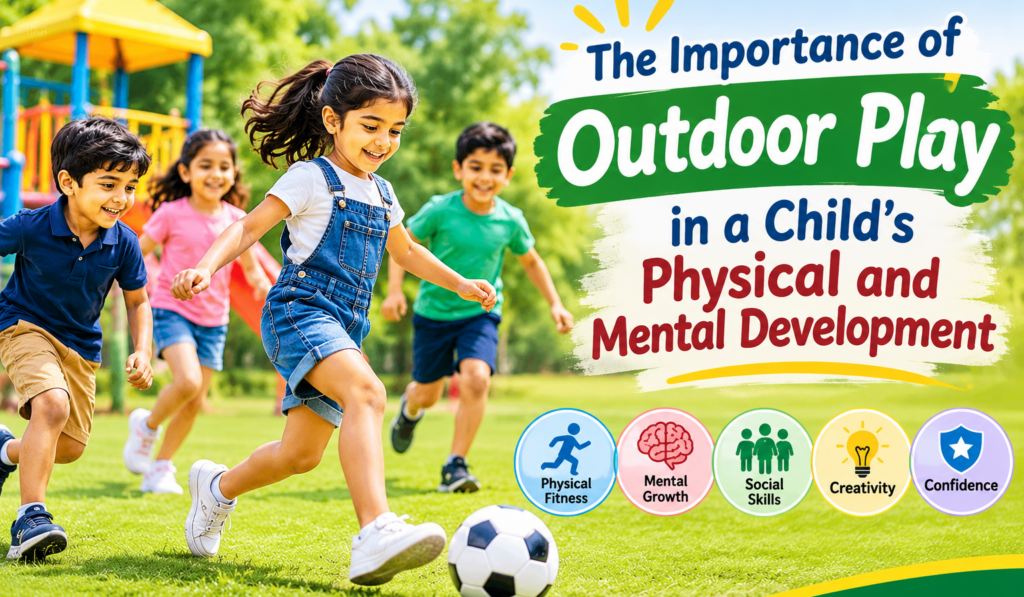
The Importance of Outdoor Play in a Child's Physical and Mental Development
In today’s fast-paced world, children are spending more time indoors, often occupied with television, mobile phones, tablets and other digital devices. While technology has become an important part of modern learning, children also need time away from screens to move, explore, play and experience the world around them.
Outdoor play is not simply a way to keep children entertained. It is an essential part of childhood that contributes to their physical health, mental well-being, social skills and overall development. Whether it is running in a playground, playing a team sport, cycling, climbing or simply exploring nature, every outdoor experience offers children an opportunity to learn something new.
At school and at home, encouraging children to participate in outdoor activities can help build healthy habits that benefit them throughout life.
1. Builds Physical Strength and Fitness
One of the most noticeable benefits of outdoor play is its positive impact on physical health. Activities such as running, jumping, skipping, cycling and playing sports keep children active and help develop their muscles and bones.
Regular physical activity also improves balance, coordination, flexibility and stamina. Children gradually become more confident in their physical abilities as they learn to perform different movements and participate in games.
An active childhood can also help establish healthy lifestyle habits and reduce the amount of time children spend sitting in front of screens.
2. Supports Mental Health and Emotional Well-being
Outdoor play gives children an opportunity to relax, refresh their minds and release built-up energy. Spending time in open spaces and natural surroundings can help reduce everyday stress and support a positive mood.
Children often feel more relaxed when they have the freedom to run, explore and play without the pressure of completing a structured task. These experiences also allow them to express their emotions naturally.
Playing outdoors can help children develop confidence, independence and a sense of achievement. Even small experiences, such as learning to ride a bicycle or completing a playground activity, can make them feel proud of their abilities.
3. Improves Social Skills and Teamwork
Outdoor games provide children with many opportunities to interact with others. Team sports, group games and playground activities teach them how to communicate, cooperate and work towards a common goal.
While playing together, children learn important social skills such as:
- Sharing equipment and taking turns.
- Following rules and respecting others.
- Communicating ideas and listening to teammates.
- Handling disagreements and resolving conflicts.
- Accepting both victory and defeat gracefully.
These experiences help children understand the importance of teamwork, friendship and sportsmanship. They also learn that success is not always about winning but about participating and supporting one another.
4. Develops Creativity and Imagination
Unlike many indoor activities that follow fixed instructions, outdoor play often gives children the freedom to create their own games and explore different possibilities.
A simple playground can become an imaginary adventure, a garden can turn into a place for nature exploration, and everyday objects can inspire creative games.
When children are given opportunities to explore freely, they begin to use their imagination, think independently and come up with new ideas.
Such experiences encourage curiosity and creative thinking, which are valuable qualities in both academic learning and everyday life.
5. Strengthens Problem-Solving and Decision-Making Skills
Outdoor activities often present children with small challenges that require them to think and make decisions.
For example, while playing a team game, children may need to decide how to reach a target, change their strategy or work together to solve a problem. Climbing, balancing and obstacle activities also encourage them to assess situations and understand their abilities.
Through these experiences, children gradually learn to:
- Think before taking action.
- Understand simple risks and make safe choices.
- Find solutions when something does not go as planned.
- Adapt to changing situations.
- Learn from mistakes and try again.
These practical experiences help develop independent thinking and problem-solving abilities.
6. Encourages a Connection with Nature
Outdoor play gives children the chance to observe and understand their natural surroundings. Activities such as gardening, nature walks, observing birds, collecting fallen leaves and learning about plants can make environmental learning more interesting.
When children interact with nature, they begin to notice the small details of their surroundings and develop curiosity about the environment.
These experiences can also introduce important values such as caring for plants, avoiding littering, conserving water and respecting animals.
Developing an appreciation for nature at an early age can encourage children to become more responsible towards the environment.
7. Improves Concentration and Learning Abilities
Physical movement and outdoor activities can support children’s attention, alertness and readiness to learn.
After spending time playing outdoors, children may return to classroom activities feeling refreshed and more engaged. Outdoor games also provide practical opportunities to understand concepts such as numbers, directions, shapes, measurements and teamwork.
For example, a simple ball game can help children practise counting, while a treasure hunt can encourage observation, logical thinking and following instructions.
Learning does not always have to happen through books and worksheets. Sometimes, the most memorable lessons come from experiences that allow children to see, touch, move and participate.
8. Builds Confidence and Independence
Outdoor play encourages children to try new activities, face small challenges and discover their strengths.
Whether they are learning a new sport, participating in a group game or completing an obstacle course, each experience helps them understand what they can achieve through practice and effort.
Children also learn to make simple decisions independently, such as choosing a game, following its rules or finding ways to participate with others.
With encouragement and appropriate supervision, outdoor activities can help children become more confident, responsible and independent.
9. Outdoor Play Helps Reduce Excessive Screen Time
Digital devices are now a regular part of children’s lives. Although technology can support education and entertainment, excessive screen time may reduce opportunities for physical movement, face-to-face interaction and creative play.
Parents can help children maintain a healthier balance by introducing enjoyable outdoor activities into their daily routines.
Some simple ways to encourage outdoor play include:
- Taking children for an evening walk.
- Encouraging cycling or skipping.
- Planning weekend visits to parks and playgrounds.
- Introducing children to outdoor sports.
- Organising family games and activities.
- Encouraging gardening and nature-based activities.
The aim is not to completely eliminate technology but to ensure that children have enough opportunities to enjoy active, meaningful experiences away from screens.
10. The Role of Schools in Encouraging Outdoor Activities
Schools play an important role in creating opportunities for children to remain physically active and develop important life skills.
Along with classroom teaching, students should be encouraged to participate in sports, physical education, outdoor games, group activities and recreational events.
These activities provide a break from routine academic learning while helping children develop discipline, teamwork, confidence and sportsmanship.
At The Shantiniketan School, Panvel, learning and development extend beyond textbooks. Along with academic education, opportunities for activities, participation and interaction help students explore their interests, develop practical skills and build confidence.
A balanced school environment recognises that physical activity, creative expression and academic learning are all important parts of a child’s growth.
How Much Outdoor Play Do Children Need?
The amount of physical activity a child needs depends on their age and individual abilities.
The World Health Organization recommends that children and adolescents aged 5–17 years should get an average of at least 60 minutes per day of moderate-to-vigorous physical activity across the week. Activities should include a variety of aerobic movements, with vigorous and muscle- and bone-strengthening activities on at least three days a week.
Younger children also benefit from plenty of opportunities for active play throughout the day.
Parents should choose age-appropriate activities, ensure safe play environments and allow children to enjoy movement without making every activity competitive.
Frequently Asked Questions (FAQs)
1. Why is outdoor play important for children?
Outdoor play supports physical fitness, emotional well-being, social interaction, creativity and problem-solving skills. It also helps children develop confidence and independence through practical experiences.
2. How does outdoor play improve a child's mental development?
Outdoor activities encourage children to think, explore, make decisions and interact with others. They also provide opportunities for relaxation, creative expression and emotional development.
3. What are some examples of outdoor activities for school children?
4. Can outdoor play improve academic performance?
Outdoor play can support attention, memory, concentration and learning readiness. Activities that involve movement and exploration also help children understand concepts through practical experiences.
5. How can parents encourage children to play outdoors?
Parents can set aside time for outdoor activities, visit parks, encourage sports, organise family games and limit unnecessary screen time. Participating in activities with children can also make outdoor play more enjoyable.
Childhood is a time for exploration, discovery and learning through experiences. Outdoor play gives children the freedom to move, think, interact and understand the world beyond their immediate surroundings.
Its benefits go far beyond physical fitness. It helps develop confidence, creativity, emotional strength, teamwork and problem-solving abilities that children carry into their everyday lives.
In a world where academic learning and digital technology are becoming increasingly important, we must also remember the value of simply letting children play. A healthy balance between classroom learning, outdoor activities and free play can help children grow into confident, active and well-rounded individuals.
At The Shantiniketan School, Panvel, we believe that every aspect of a child’s development matters, and meaningful learning experiences help lay the foundation for a brighter future.